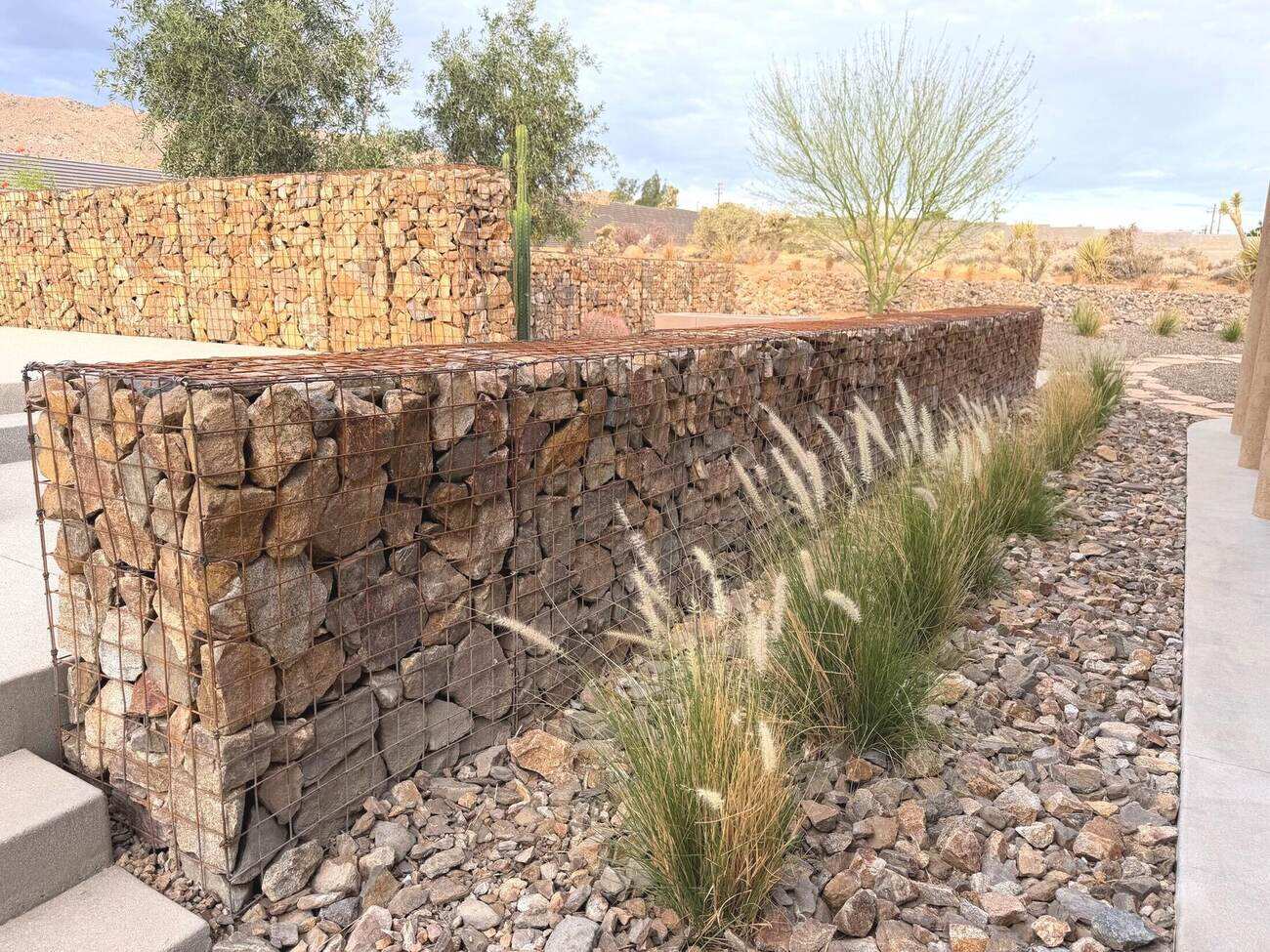
Gabion Basket Wall
Beautiful stone walls, built from natural materials and careful engineering.
The trench, the drainage, and the base nobody ever sees are what keep this wall standing straight twenty years on.
The trench, the drainage, and the base nobody ever sees are what keep this wall standing straight twenty years on.
Gabion walls look simple from the outside: wire, stone, done. What actually holds one together for decades happens earlier, before a single rock ever goes in the cage. The excavation. The drainage. The frame underneath it all. Here's that process, start to finish.
A gabion wall is only as good as what's underneath it. Skip the drainage layer, and water pressure builds up behind the wall every time it rains, slowly pushing it out of plane. Skip a proper gravel base, and the whole thing settles unevenly within a couple of years. We treat the parts nobody ever sees, the excavation, the fabric, the base, as the part of the job that decides whether this wall is still standing straight in twenty years or in five.
Every basket on this wall got packed by hand. Dumped stone leaves voids. It settles awkwardly over time and never quite looks intentional. Hand-placing each rock let us control how the face of the wall reads from the pool deck, while packing the interior tight enough that nothing shifts.
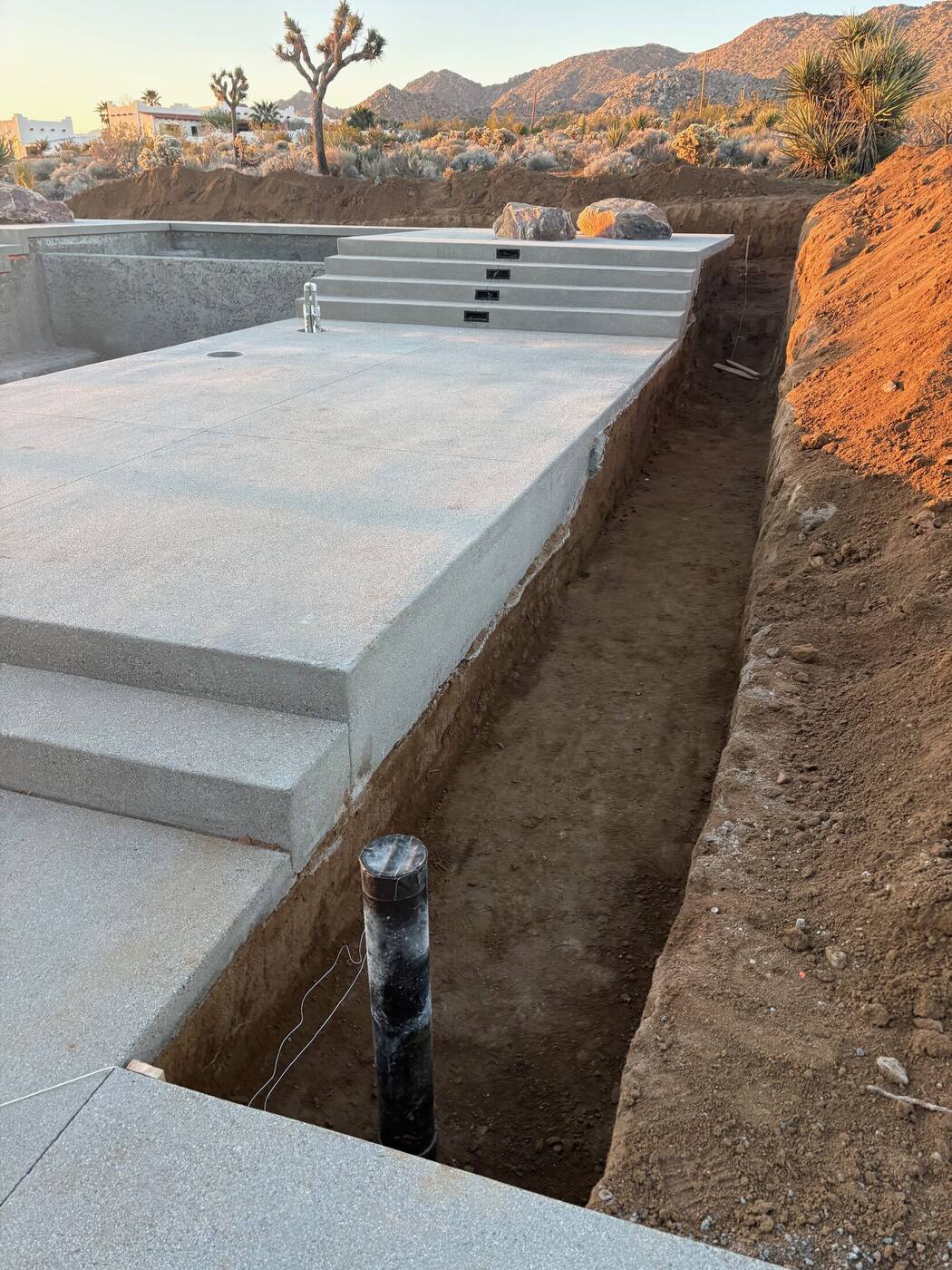
We excavate the full run of the wall to a consistent depth and grade before anything else happens. Get this line wrong, even slightly, and it compounds. Every basket that goes in above it needs to sit level and square against the last.
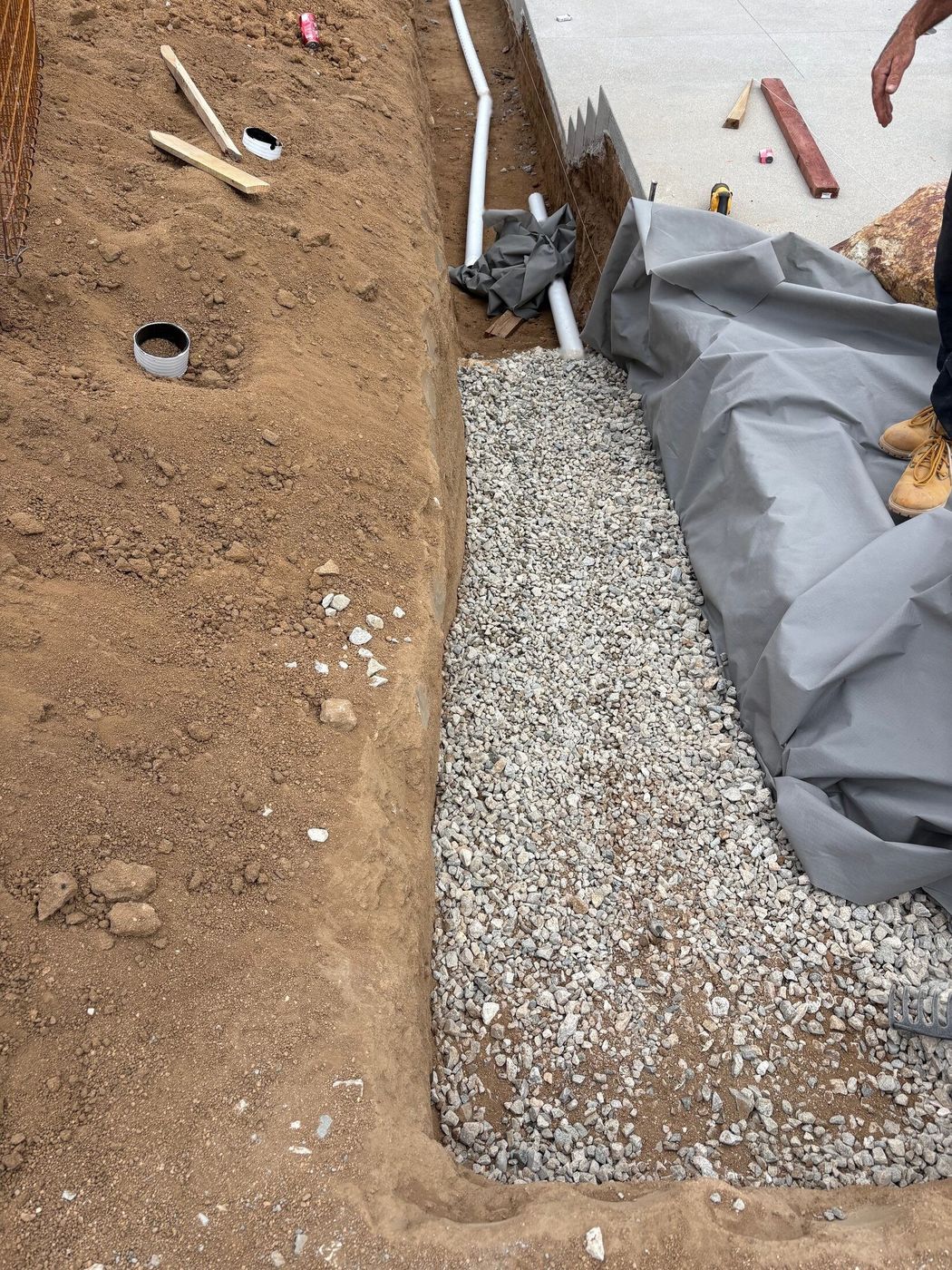
Geotextile fabric lines the trench first, keeping the gravel base clean so that soil doesn't migrate in. Then a perforated drain pipe goes into that gravel, carrying water away from the wall instead of letting it pool and build pressure behind it.
This layer disappears completely once the wall goes up. It's also the single biggest reason a gabion wall lasts, or doesn't.
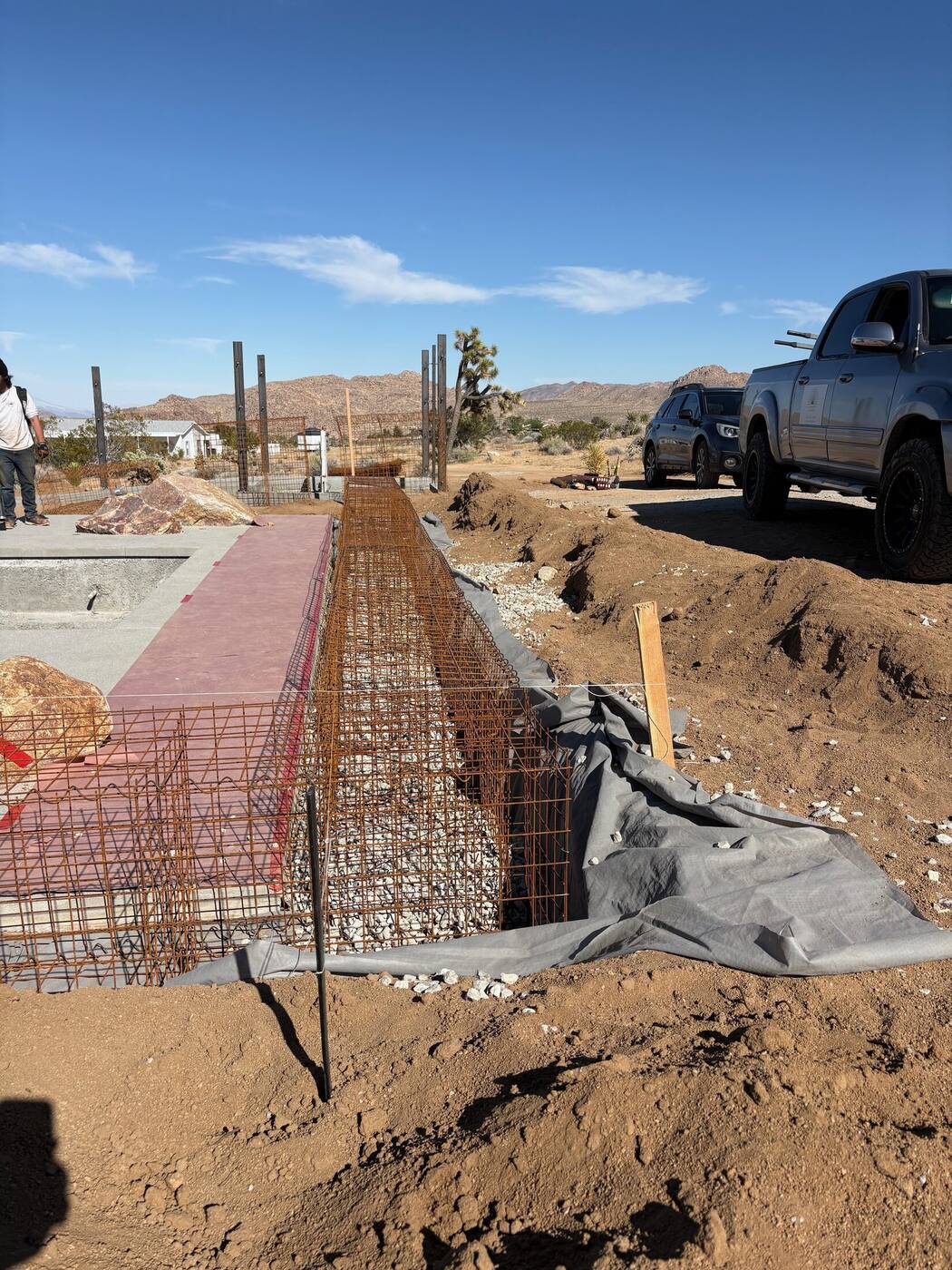
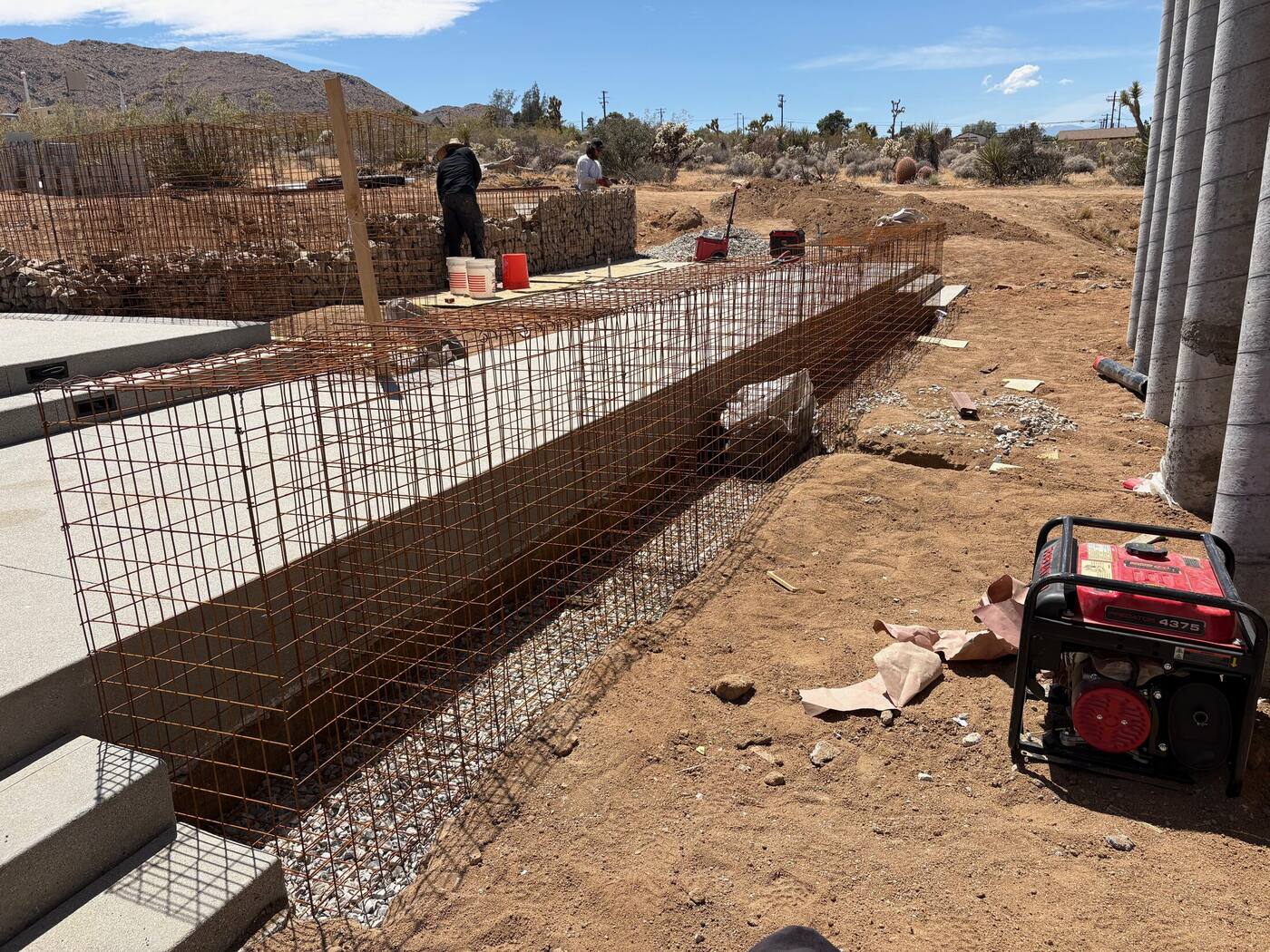
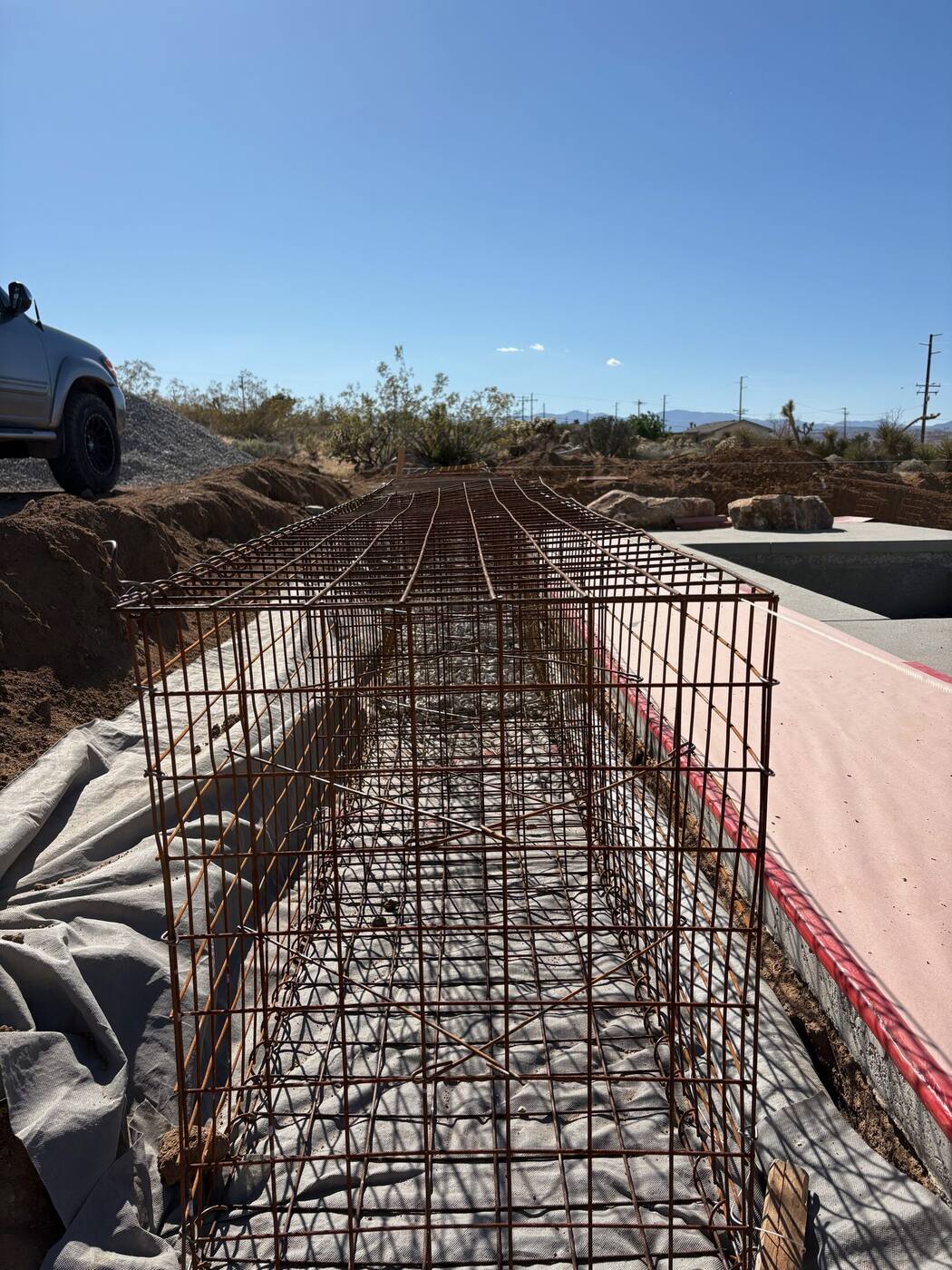
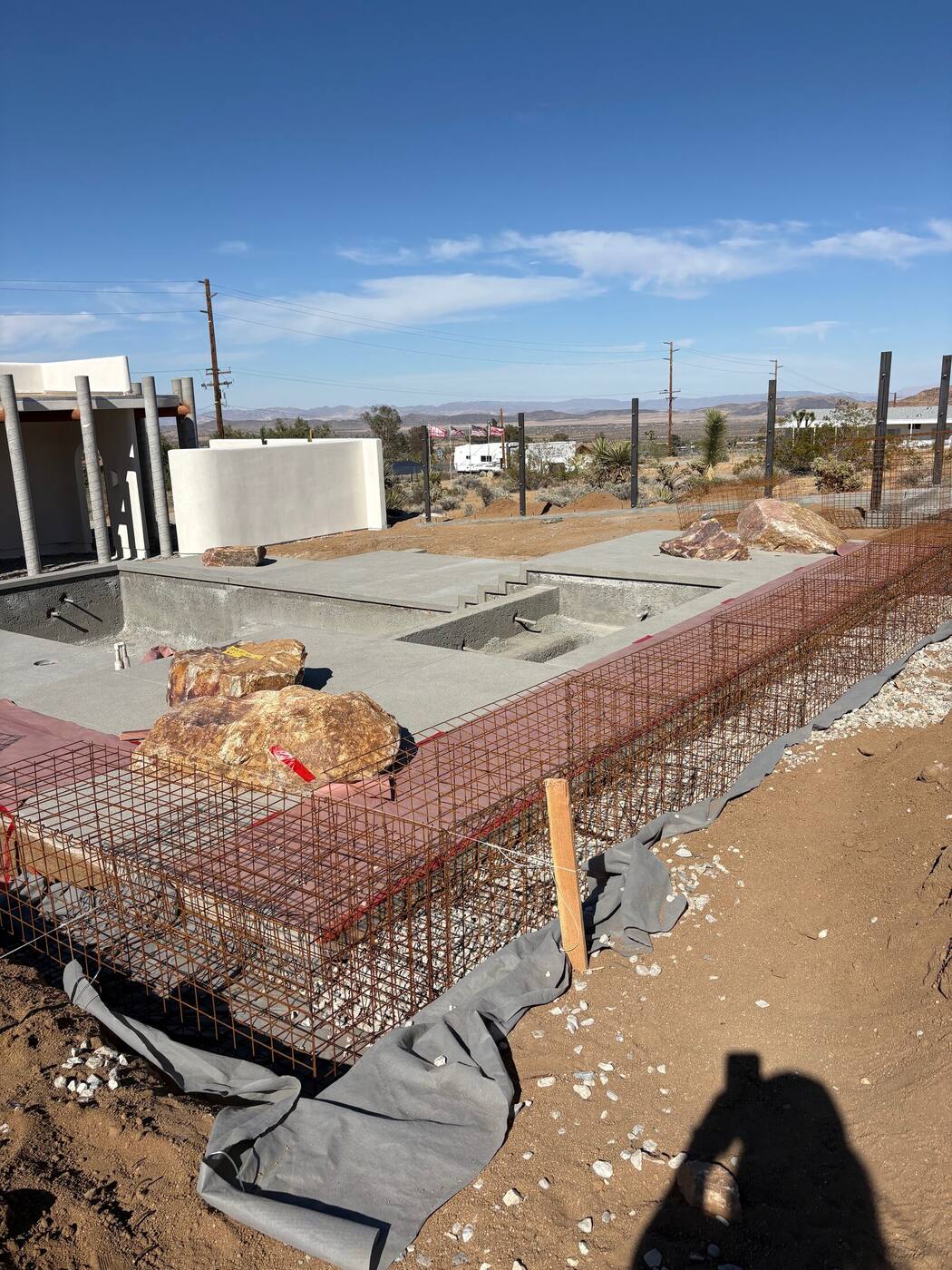
Every cage gets built on site: steel mesh panels reinforced with internal trusses, then tied together by hand, section by section. We size each one to its exact spot along the wall, so two sections never leave a gap or an overlap where they meet. Getting these cages plumb and square is what gives the finished wall its clean line.
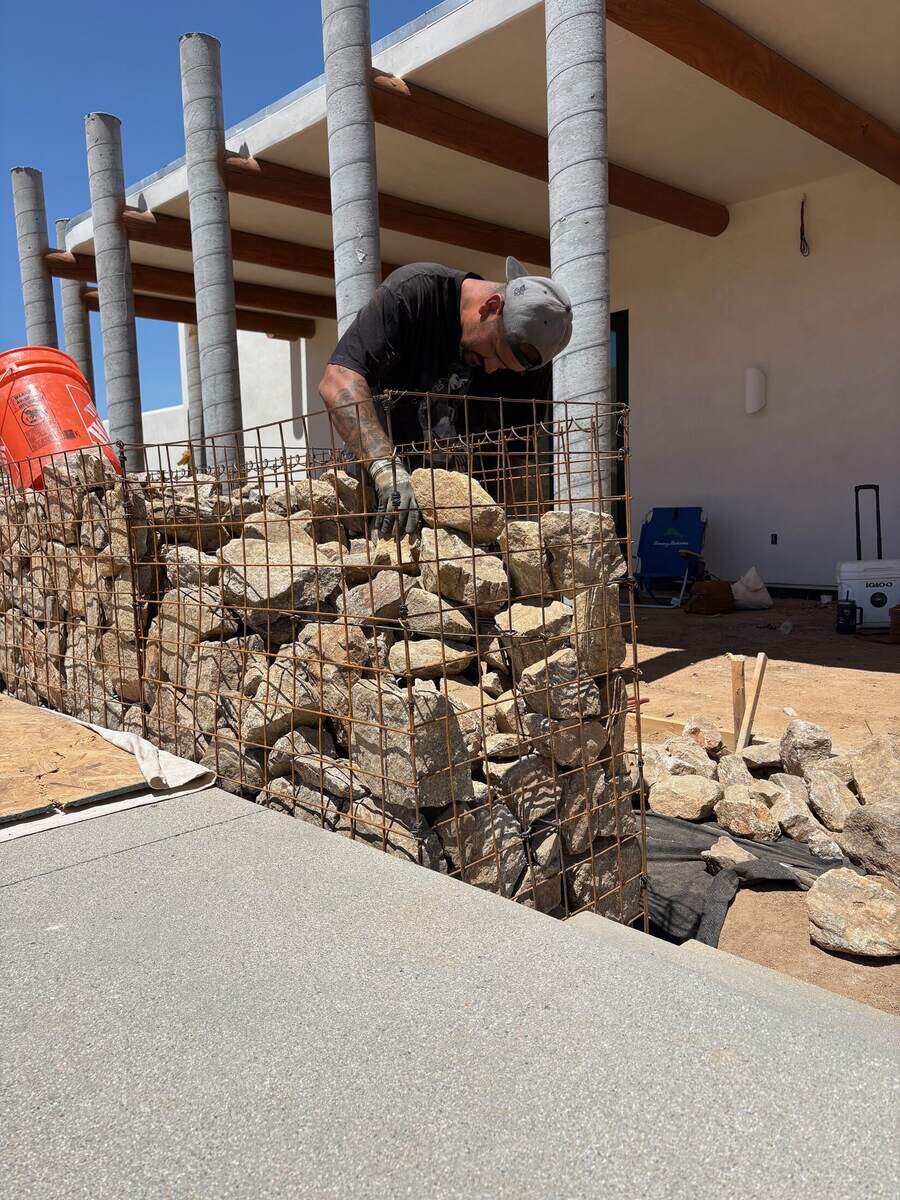
We hand-select and hand-place every stone instead of dumping fill into the cage. That lets us face the wall with the rocks that read best from the pool deck, while packing the core dense enough that there's nowhere left for it to shift.
It's slower. It's also the difference between a wall that looks engineered and one that looks like it was assembled.
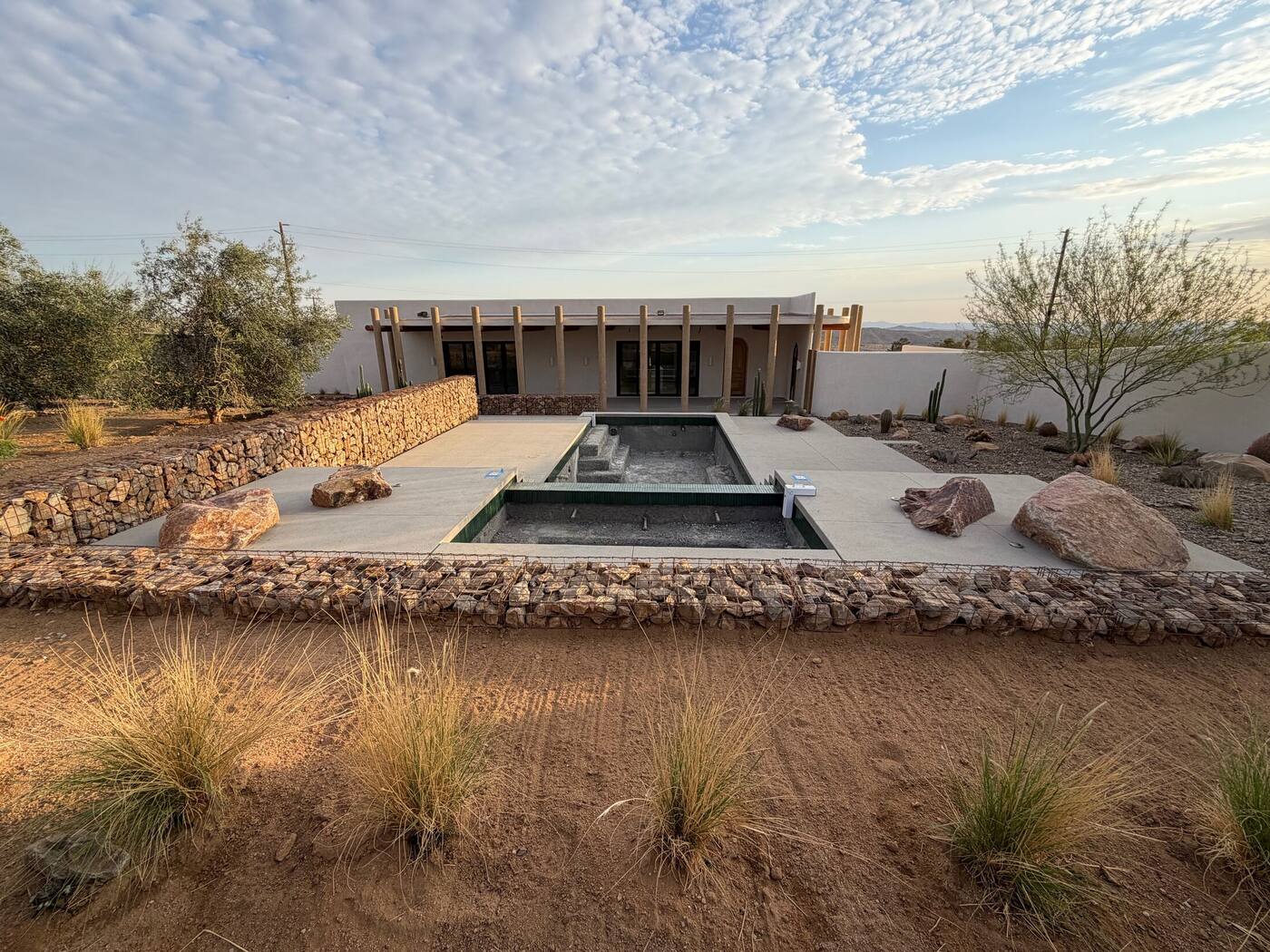
The finished wall wraps the full pool deck and continues around the property line: the same structure, the same process, run after run.
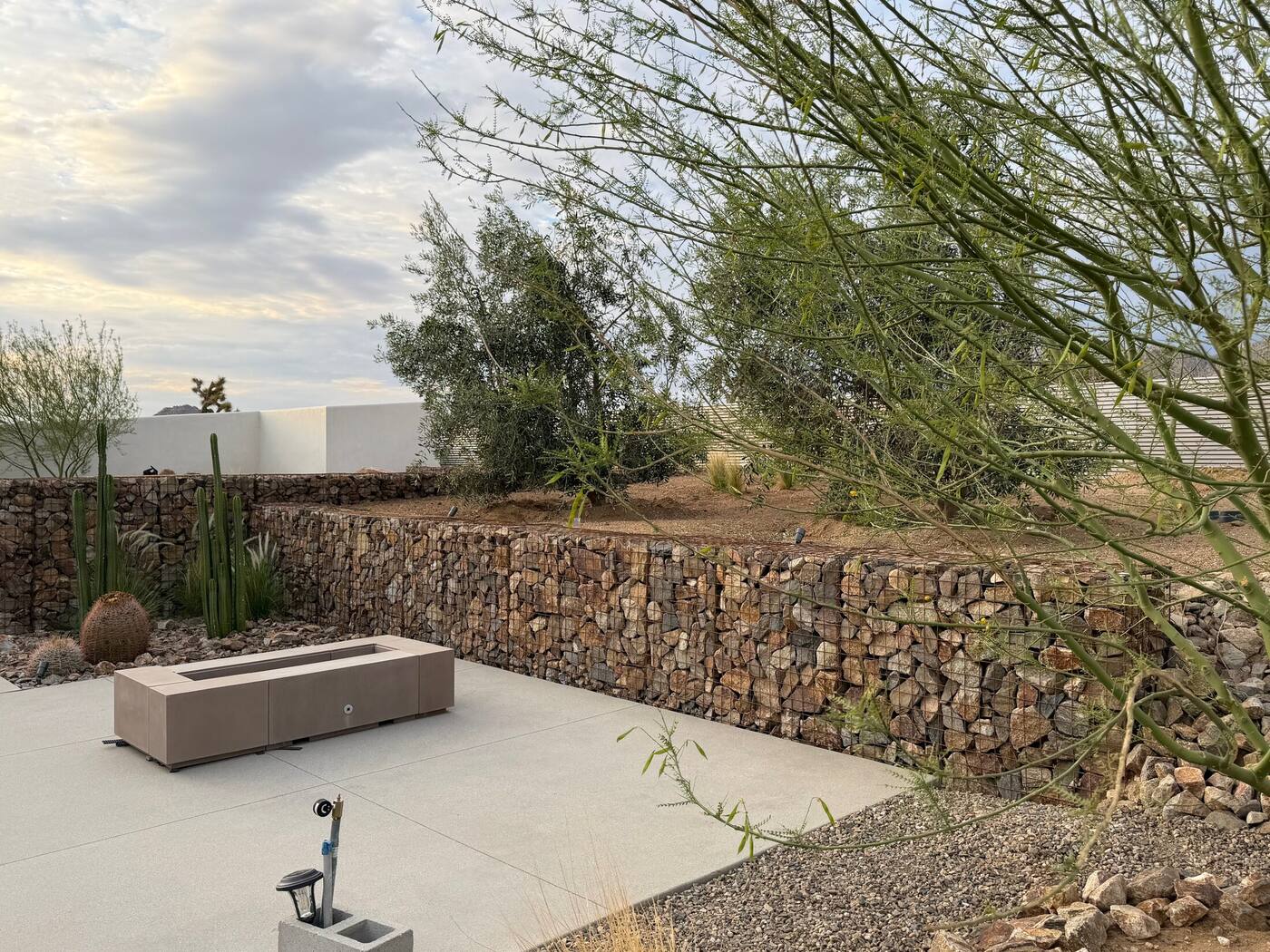
Gabion walls framing the pool and patio, backed right up to the house.
The wall doubles as a backdrop for the fire feature and patio seating.
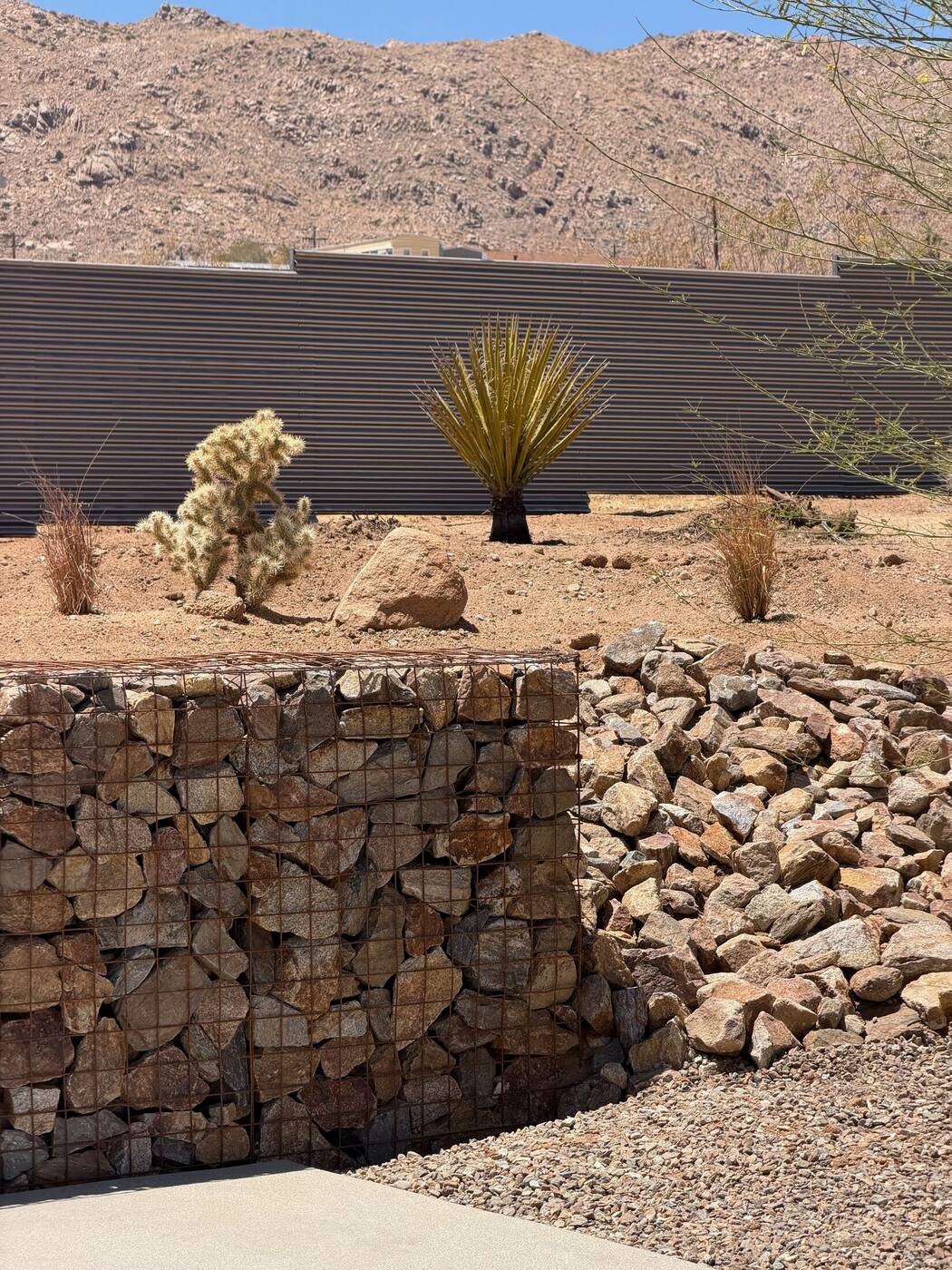
The same wall carries the grade change out toward the open desert.
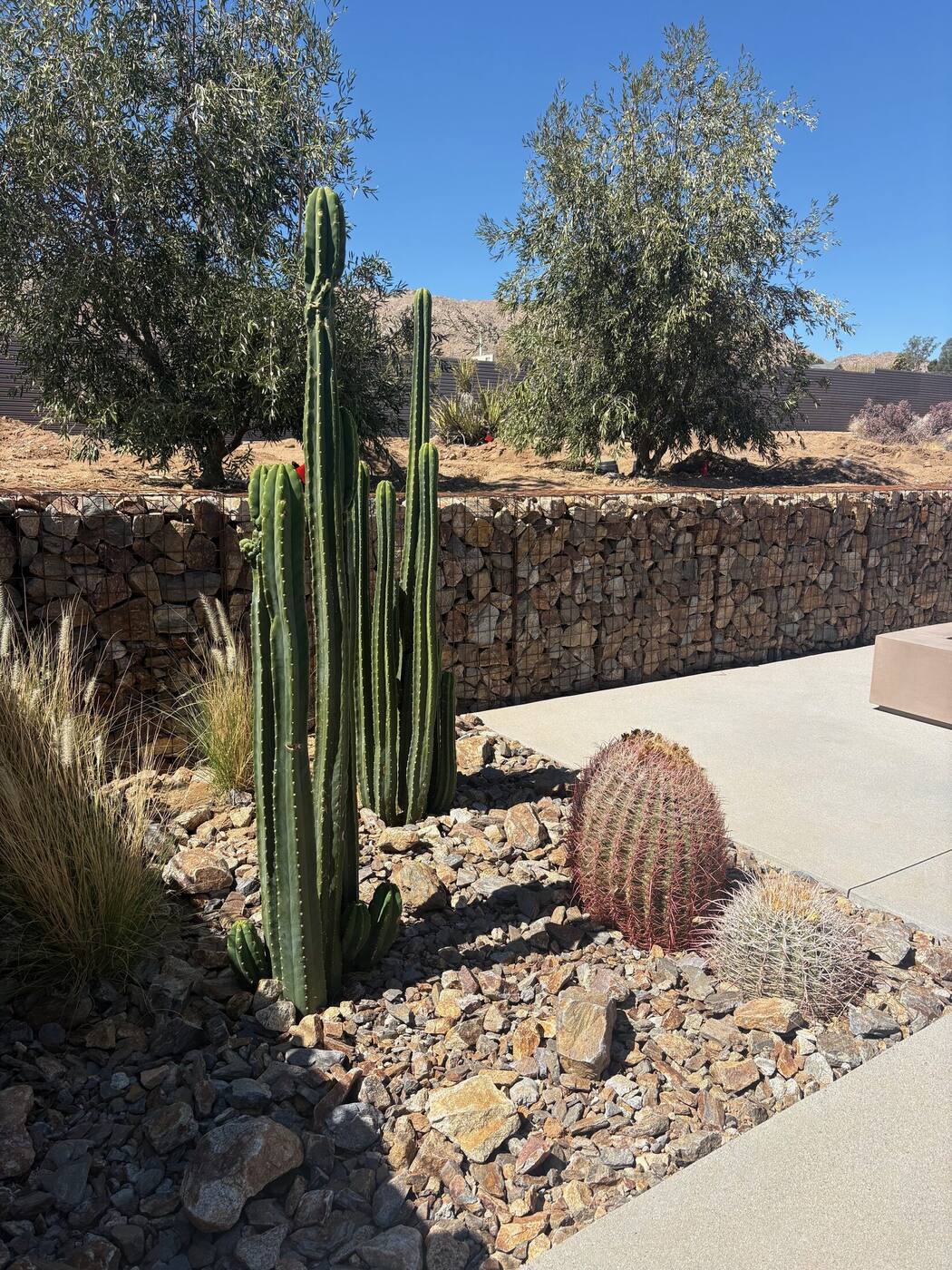
Cactus and native grasses soften the stone edge.